

- 11 Dec 2025
- - Charlie King
Prescribing fewer antibiotics might not be enough to combat threat of ‘superbugs,’ says new research
Antimicrobial resistance is still spreading in the environment despite a reduction in the amounts of antibiotic drugs prescribed, according to a new study led by the University of Bath. Researchers warn that multiple approaches will be required to tackle the increasing threat of antimicrobial resistance to public health.
Antimicrobial resistance (AMR) happens when bacteria evolves over time and doesn’t respond to treatment with antibiotics. It’s been highlighted by the World Health Organization as one of the world’s biggest killers, causing over five million deaths per year.
AMR can develop through several routes: over-use or misuse of antibiotics to treat or prevent bacterial infections; using antibiotics in farm animals to improve meat production; bacteria can also acquire resistance directly by swapping genes with resistant microbes in the environment.
Researchers from the University’s Department of Chemistry, Centre of Excellence in Water-Based Early-Warning Systems for Health Protection (CWBE) and Institute of Sustainability and Climate Change worked with Wessex Water to track the use of antibiotics and the presence of genes linked to AMR in the environment by analysing wastewater.
They took samples from four wastewater treatment plants in southwest England over two years during the COVID-19 pandemic and compared them with previous data collected before 2019.
They matched these data with the number of prescriptions for antibiotics during the same time period. They found that despite a seasonal drop in the amount of antibiotics prescribed in years 2017-19 and lower amounts of antibiotic drugs identified in wastewater, there was no corresponding drop in the levels of AMR genes in the environment.
In 2020, a significant reduction in antibiotics and AMR genes was observed during lockdowns due to COVID pandemic social distancing measures that lead to the reduction in the spread of resistant bacteria. After lockdowns, when social interactions increased, both antibiotic presence/prescription and AMR genes increased indicating increased pathogen spread by infected individuals.
The study is published in the Journal of Global Antimicrobial Resistance.
Professor Barbara Kasprzyk-Hordern, Director of CWBE, said: “The spread of antimicrobial resistance is a huge threat to all our lives – we rely on antibiotics for treating common infections and to safely carry out surgical procedures.
“The main focus globally on combatting AMR has been to reduce the amount of antibiotics used, but our research findings show that this alone might not be enough to tackle the problem.
“Once resistance genes are out there in the environment, they can be transferred between bacteria, making more and more of them resistant to treatment with antibiotics.
“This is really worrying because we had previously assumed that less usage would result in less AMR, but our results show the problem is more complex than that.”
The researchers suggest that governments and policymakers must take a ‘One Health’ approach to tackling AMR – not just looking at how antibiotics are used in human health, but also how they are used in animals and the effects of antibiotics on the wider environment.
The researchers will tackle this and other urgent public health issues while working together with partners across academia, government organisations and industry, in the Centre of Excellence in Water-Based Early-Warning Systems for Health Protection that launched in April 2025.
They are establishing first living lab facility that will enable longitudinal studies spanning from early warning for pathogen exposure though to chemical exposure and associated health outcomes.
Dr Like Xu, first author of the study, said: “Antimicrobial resistance is a growing concern, as antibiotics and antibiotic-resistant genes persist in the environment, leading to serious and widespread issues.
“Our work shows that wastewater-based epidemiology is an innovative and cost-effective monitoring tool that can be used to understand antibiotics usage and how antibiotic-resistant genes spread.
“Through wastewater analysis, this approach helps identify new resistance patterns, understand their transmission and establish baselines at community level.
“This evidence can support decision makers in developing coordinated interventions and assessing their effectiveness in near-real time.”
More information on wastewater-based epidemiology: Tracking the health of the nation through wastewater.
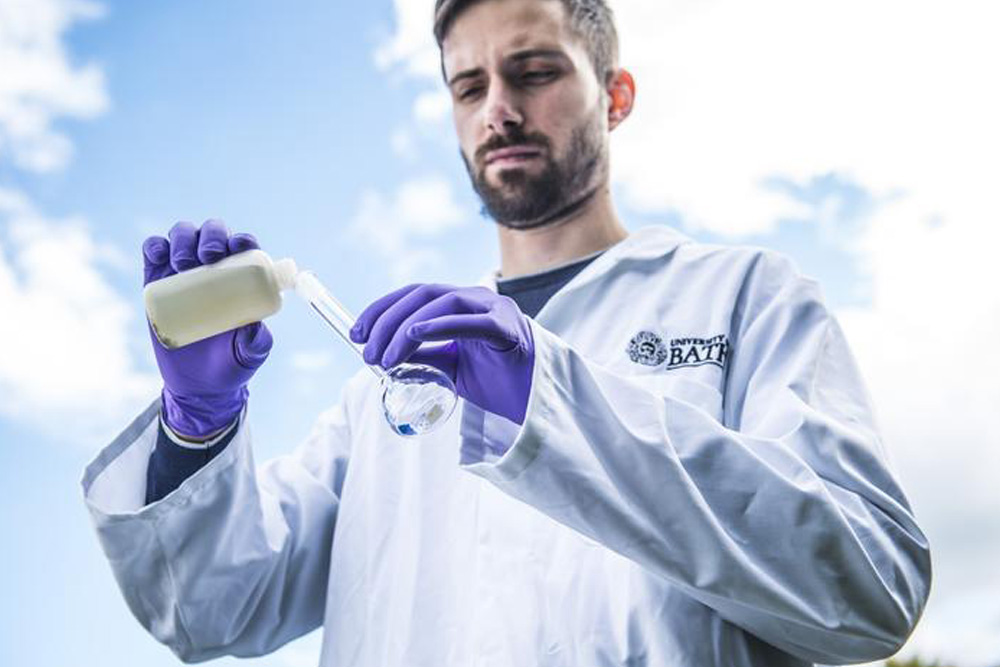
Image: Dr Nicola Ceolotto, one of the co-authors of the paper.
Related Career Advice
- 11 Dec 2025
- - Charlie King
Prescribing fewer antibiotics might not be enough to combat threat of ‘superbugs,’ says new research
Antimicrobial resistance is still spreading in the environment despite a reduction in the amounts of antibiotic drugs prescribed, according to a new study led by the University of Bath. Researchers warn that multiple approaches will be required to tackle the increasing threat of antimicrobial resistance to public health.
Antimicrobial resistance (AMR) happens when bacteria evolves over time and doesn’t respond to treatment with antibiotics. It’s been highlighted by the World Health Organization as one of the world’s biggest killers, causing over five million deaths per year.
AMR can develop through several routes: over-use or misuse of antibiotics to treat or prevent bacterial infections; using antibiotics in farm animals to improve meat production; bacteria can also acquire resistance directly by swapping genes with resistant microbes in the environment.
Researchers from the University’s Department of Chemistry, Centre of Excellence in Water-Based Early-Warning Systems for Health Protection (CWBE) and Institute of Sustainability and Climate Change worked with Wessex Water to track the use of antibiotics and the presence of genes linked to AMR in the environment by analysing wastewater.
They took samples from four wastewater treatment plants in southwest England over two years during the COVID-19 pandemic and compared them with previous data collected before 2019.
They matched these data with the number of prescriptions for antibiotics during the same time period. They found that despite a seasonal drop in the amount of antibiotics prescribed in years 2017-19 and lower amounts of antibiotic drugs identified in wastewater, there was no corresponding drop in the levels of AMR genes in the environment.
In 2020, a significant reduction in antibiotics and AMR genes was observed during lockdowns due to COVID pandemic social distancing measures that lead to the reduction in the spread of resistant bacteria. After lockdowns, when social interactions increased, both antibiotic presence/prescription and AMR genes increased indicating increased pathogen spread by infected individuals.
The study is published in the Journal of Global Antimicrobial Resistance.
Professor Barbara Kasprzyk-Hordern, Director of CWBE, said: “The spread of antimicrobial resistance is a huge threat to all our lives – we rely on antibiotics for treating common infections and to safely carry out surgical procedures.
“The main focus globally on combatting AMR has been to reduce the amount of antibiotics used, but our research findings show that this alone might not be enough to tackle the problem.
“Once resistance genes are out there in the environment, they can be transferred between bacteria, making more and more of them resistant to treatment with antibiotics.
“This is really worrying because we had previously assumed that less usage would result in less AMR, but our results show the problem is more complex than that.”
The researchers suggest that governments and policymakers must take a ‘One Health’ approach to tackling AMR – not just looking at how antibiotics are used in human health, but also how they are used in animals and the effects of antibiotics on the wider environment.
The researchers will tackle this and other urgent public health issues while working together with partners across academia, government organisations and industry, in the Centre of Excellence in Water-Based Early-Warning Systems for Health Protection that launched in April 2025.
They are establishing first living lab facility that will enable longitudinal studies spanning from early warning for pathogen exposure though to chemical exposure and associated health outcomes.
Dr Like Xu, first author of the study, said: “Antimicrobial resistance is a growing concern, as antibiotics and antibiotic-resistant genes persist in the environment, leading to serious and widespread issues.
“Our work shows that wastewater-based epidemiology is an innovative and cost-effective monitoring tool that can be used to understand antibiotics usage and how antibiotic-resistant genes spread.
“Through wastewater analysis, this approach helps identify new resistance patterns, understand their transmission and establish baselines at community level.
“This evidence can support decision makers in developing coordinated interventions and assessing their effectiveness in near-real time.”
More information on wastewater-based epidemiology: Tracking the health of the nation through wastewater.
Image: Dr Nicola Ceolotto, one of the co-authors of the paper.
- 11 Dec 2025
- - Charlie King
Prescribing fewer antibiotics might not be enough to combat threat of ‘superbugs,’ says new research
Antimicrobial resistance is still spreading in the environment despite a reduction in the amounts of antibiotic drugs prescribed, according to a new study led by the University of Bath. Researchers warn that multiple approaches will be required to tackle the increasing threat of antimicrobial resistance to public health.
Antimicrobial resistance (AMR) happens when bacteria evolves over time and doesn’t respond to treatment with antibiotics. It’s been highlighted by the World Health Organization as one of the world’s biggest killers, causing over five million deaths per year.
AMR can develop through several routes: over-use or misuse of antibiotics to treat or prevent bacterial infections; using antibiotics in farm animals to improve meat production; bacteria can also acquire resistance directly by swapping genes with resistant microbes in the environment.
Researchers from the University’s Department of Chemistry, Centre of Excellence in Water-Based Early-Warning Systems for Health Protection (CWBE) and Institute of Sustainability and Climate Change worked with Wessex Water to track the use of antibiotics and the presence of genes linked to AMR in the environment by analysing wastewater.
They took samples from four wastewater treatment plants in southwest England over two years during the COVID-19 pandemic and compared them with previous data collected before 2019.
They matched these data with the number of prescriptions for antibiotics during the same time period. They found that despite a seasonal drop in the amount of antibiotics prescribed in years 2017-19 and lower amounts of antibiotic drugs identified in wastewater, there was no corresponding drop in the levels of AMR genes in the environment.
In 2020, a significant reduction in antibiotics and AMR genes was observed during lockdowns due to COVID pandemic social distancing measures that lead to the reduction in the spread of resistant bacteria. After lockdowns, when social interactions increased, both antibiotic presence/prescription and AMR genes increased indicating increased pathogen spread by infected individuals.
The study is published in the Journal of Global Antimicrobial Resistance.
Professor Barbara Kasprzyk-Hordern, Director of CWBE, said: “The spread of antimicrobial resistance is a huge threat to all our lives – we rely on antibiotics for treating common infections and to safely carry out surgical procedures.
“The main focus globally on combatting AMR has been to reduce the amount of antibiotics used, but our research findings show that this alone might not be enough to tackle the problem.
“Once resistance genes are out there in the environment, they can be transferred between bacteria, making more and more of them resistant to treatment with antibiotics.
“This is really worrying because we had previously assumed that less usage would result in less AMR, but our results show the problem is more complex than that.”
The researchers suggest that governments and policymakers must take a ‘One Health’ approach to tackling AMR – not just looking at how antibiotics are used in human health, but also how they are used in animals and the effects of antibiotics on the wider environment.
The researchers will tackle this and other urgent public health issues while working together with partners across academia, government organisations and industry, in the Centre of Excellence in Water-Based Early-Warning Systems for Health Protection that launched in April 2025.
They are establishing first living lab facility that will enable longitudinal studies spanning from early warning for pathogen exposure though to chemical exposure and associated health outcomes.
Dr Like Xu, first author of the study, said: “Antimicrobial resistance is a growing concern, as antibiotics and antibiotic-resistant genes persist in the environment, leading to serious and widespread issues.
“Our work shows that wastewater-based epidemiology is an innovative and cost-effective monitoring tool that can be used to understand antibiotics usage and how antibiotic-resistant genes spread.
“Through wastewater analysis, this approach helps identify new resistance patterns, understand their transmission and establish baselines at community level.
“This evidence can support decision makers in developing coordinated interventions and assessing their effectiveness in near-real time.”
More information on wastewater-based epidemiology: Tracking the health of the nation through wastewater.
Image: Dr Nicola Ceolotto, one of the co-authors of the paper.
