

- 11 Dec 2025
- - Charlie King
Lack of soap most reported barrier to effective hand hygiene in shared community spaces
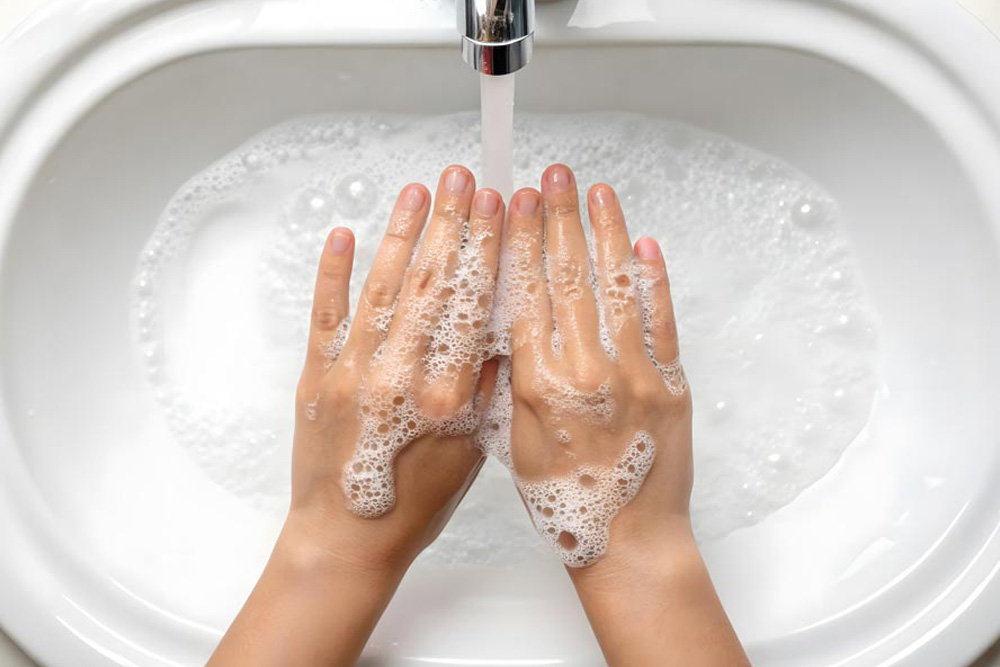
A lack of soap is the most often reported barrier to effective hand hygiene—key to curbing the spread of infection—in shared community spaces, such as households, schools, and public places, finds a systematic review of the available research, published in the open access journal BMJ Global Health.
It found that the barriers most often reported concerned physical opportunity, such as the availability of soap; and lack of motivation—hand hygiene not prioritised, or not habitual practice, for example. On the other hand, the enablers most often reported aligned with motivation in the form of habitual practice and perceived health risk.
A further systematic found that most of the reported efforts to improve handwashing didn’t always address identified barriers or enablers to ensure behavioural sustainability, nor did they fully consider the fundamental resources needed for hand hygiene, such as soap, water, and handwashing facilities.
“If settings do not already have these critical hand hygiene components in the environment, interventions that seek to improve hand hygiene only through motivation, social pressure, or by increasing knowledge should be reconsidered,” conclude the authors.
The reviews form part of a suite of 5, published in a special supplement to the journal that have informed the World Health Organization (WHO) and UNICEF guidelines on hand hygiene in community settings due to be published October 15 on Global Handwashing Day.
The guidelines were prompted by the many inconsistencies and lack of sound evidence to support some of the recommended practices contained in current handwashing guidance around the globe.
The systematic reviews focus on the effectiveness of methods to remove pathogens from the hands; minimum material requirements; behavioural factors; strategies to improve handwashing; and the effectiveness of government measures.
The review looking at what works best for removing and inactivating pathogens, found that most of the evidence assessed capacity to reduce bacteria; just 4% of studies addressed enveloped viruses, such as flu, HIV, respiratory syncytial virus (RSV), and human coronaviruses, and even fewer focused on other pathogens, such as fungi and protozoa.
Other knowledge gaps included commonly used soap alternatives around the world, such as sand and ash; optimal drying methods; and the impact of microbially contaminated water.
“To formulate strong recommendations for handwashing methods, particularly considering viral pandemic illnesses and community resource restrictions, further research that describes the efficacy and effectiveness of a wider range of methods is critical,” conclude the authors.
In a linked commentary, Joanna Esteves Mills, of WHO’s Water, Sanitation, Hygiene and Health Unit, points out that hand hygiene not only protects health and strengthens community resilience, but it also reduces pressure on health systems by saving resources needed for other health priorities.
It can also curb the need for antibiotic treatment, so reducing the spread of antimicrobial resistance and the associated deaths and health costs, she adds.
Yet “despite international recognition of its importance, global progress on hand hygiene has consistently failed to measure up to political commitments and pledges,” she writes.
“There have been gains—between 2015 and 2024, 1.6 billion people gained access to a basic handwashing facility —but in 2024 1.7 billion people still lacked a handwashing facility with soap and water at home and 611 million had no handwashing facility at all,” she adds, citing the latest figures from the WHO/UNICEF Joint Monitoring Programme for Water Supply, Sanitation and Hygiene .
“Achieving universal access by 2030 [a Sustainable Development Goal] would require a doubling in current rates of progress, rising to 11-fold in least developed countries and 8-fold in fragile contexts. Meanwhile, each year, 740,000 people die of diarrhoea or acute respiratory infections that could have been prevented with hand hygiene,” she points out.
The evidence from all 5 systematic reviews points to 3 core principles, she says:
- Access to soap and water and/or alcohol-based sanitisers are minimum material needs which should be any government’s first priority
- People need to know why, when, and how to clean hands
- An enabling physical and social environment that encourages and motivates sustained practice. In other words, one that is convenient, attractive, and with facilities that are easy to use and which comply with social norms
While governments and international institutions often mobilise rapidly during disease outbreaks, afterwards, budgets are cut, preparedness plans go dormant, and political attention shifts elsewhere, she says, creating a “cycle of panic and neglect.”
To break this cycle, governments need to strengthen systems that can incorporate hand hygiene into broader health initiatives. But strong leadership will be needed, she insists.
“Most importantly, political leadership requires sufficient investment to deliver change. Although cost-effective and relatively simple, hand hygiene interventions are not always low-cost. In particular, water supply infrastructure requires investment. Governments should not rely on emergency budgets, embedding hand hygiene financing instead in annual health budgets,” she concludes.
Related Career Advice
- 11 Dec 2025
- - Charlie King
Lack of soap most reported barrier to effective hand hygiene in shared community spaces
A lack of soap is the most often reported barrier to effective hand hygiene—key to curbing the spread of infection—in shared community spaces, such as households, schools, and public places, finds a systematic review of the available research, published in the open access journal BMJ Global Health.
It found that the barriers most often reported concerned physical opportunity, such as the availability of soap; and lack of motivation—hand hygiene not prioritised, or not habitual practice, for example. On the other hand, the enablers most often reported aligned with motivation in the form of habitual practice and perceived health risk.
A further systematic found that most of the reported efforts to improve handwashing didn’t always address identified barriers or enablers to ensure behavioural sustainability, nor did they fully consider the fundamental resources needed for hand hygiene, such as soap, water, and handwashing facilities.
“If settings do not already have these critical hand hygiene components in the environment, interventions that seek to improve hand hygiene only through motivation, social pressure, or by increasing knowledge should be reconsidered,” conclude the authors.
The reviews form part of a suite of 5, published in a special supplement to the journal that have informed the World Health Organization (WHO) and UNICEF guidelines on hand hygiene in community settings due to be published October 15 on Global Handwashing Day.
The guidelines were prompted by the many inconsistencies and lack of sound evidence to support some of the recommended practices contained in current handwashing guidance around the globe.
The systematic reviews focus on the effectiveness of methods to remove pathogens from the hands; minimum material requirements; behavioural factors; strategies to improve handwashing; and the effectiveness of government measures.
The review looking at what works best for removing and inactivating pathogens, found that most of the evidence assessed capacity to reduce bacteria; just 4% of studies addressed enveloped viruses, such as flu, HIV, respiratory syncytial virus (RSV), and human coronaviruses, and even fewer focused on other pathogens, such as fungi and protozoa.
Other knowledge gaps included commonly used soap alternatives around the world, such as sand and ash; optimal drying methods; and the impact of microbially contaminated water.
“To formulate strong recommendations for handwashing methods, particularly considering viral pandemic illnesses and community resource restrictions, further research that describes the efficacy and effectiveness of a wider range of methods is critical,” conclude the authors.
In a linked commentary, Joanna Esteves Mills, of WHO’s Water, Sanitation, Hygiene and Health Unit, points out that hand hygiene not only protects health and strengthens community resilience, but it also reduces pressure on health systems by saving resources needed for other health priorities.
It can also curb the need for antibiotic treatment, so reducing the spread of antimicrobial resistance and the associated deaths and health costs, she adds.
Yet “despite international recognition of its importance, global progress on hand hygiene has consistently failed to measure up to political commitments and pledges,” she writes.
“There have been gains—between 2015 and 2024, 1.6 billion people gained access to a basic handwashing facility —but in 2024 1.7 billion people still lacked a handwashing facility with soap and water at home and 611 million had no handwashing facility at all,” she adds, citing the latest figures from the WHO/UNICEF Joint Monitoring Programme for Water Supply, Sanitation and Hygiene .
“Achieving universal access by 2030 [a Sustainable Development Goal] would require a doubling in current rates of progress, rising to 11-fold in least developed countries and 8-fold in fragile contexts. Meanwhile, each year, 740,000 people die of diarrhoea or acute respiratory infections that could have been prevented with hand hygiene,” she points out.
The evidence from all 5 systematic reviews points to 3 core principles, she says:
- Access to soap and water and/or alcohol-based sanitisers are minimum material needs which should be any government’s first priority
- People need to know why, when, and how to clean hands
- An enabling physical and social environment that encourages and motivates sustained practice. In other words, one that is convenient, attractive, and with facilities that are easy to use and which comply with social norms
While governments and international institutions often mobilise rapidly during disease outbreaks, afterwards, budgets are cut, preparedness plans go dormant, and political attention shifts elsewhere, she says, creating a “cycle of panic and neglect.”
To break this cycle, governments need to strengthen systems that can incorporate hand hygiene into broader health initiatives. But strong leadership will be needed, she insists.
“Most importantly, political leadership requires sufficient investment to deliver change. Although cost-effective and relatively simple, hand hygiene interventions are not always low-cost. In particular, water supply infrastructure requires investment. Governments should not rely on emergency budgets, embedding hand hygiene financing instead in annual health budgets,” she concludes.
- 11 Dec 2025
- - Charlie King
Lack of soap most reported barrier to effective hand hygiene in shared community spaces
A lack of soap is the most often reported barrier to effective hand hygiene—key to curbing the spread of infection—in shared community spaces, such as households, schools, and public places, finds a systematic review of the available research, published in the open access journal BMJ Global Health.
It found that the barriers most often reported concerned physical opportunity, such as the availability of soap; and lack of motivation—hand hygiene not prioritised, or not habitual practice, for example. On the other hand, the enablers most often reported aligned with motivation in the form of habitual practice and perceived health risk.
A further systematic found that most of the reported efforts to improve handwashing didn’t always address identified barriers or enablers to ensure behavioural sustainability, nor did they fully consider the fundamental resources needed for hand hygiene, such as soap, water, and handwashing facilities.
“If settings do not already have these critical hand hygiene components in the environment, interventions that seek to improve hand hygiene only through motivation, social pressure, or by increasing knowledge should be reconsidered,” conclude the authors.
The reviews form part of a suite of 5, published in a special supplement to the journal that have informed the World Health Organization (WHO) and UNICEF guidelines on hand hygiene in community settings due to be published October 15 on Global Handwashing Day.
The guidelines were prompted by the many inconsistencies and lack of sound evidence to support some of the recommended practices contained in current handwashing guidance around the globe.
The systematic reviews focus on the effectiveness of methods to remove pathogens from the hands; minimum material requirements; behavioural factors; strategies to improve handwashing; and the effectiveness of government measures.
The review looking at what works best for removing and inactivating pathogens, found that most of the evidence assessed capacity to reduce bacteria; just 4% of studies addressed enveloped viruses, such as flu, HIV, respiratory syncytial virus (RSV), and human coronaviruses, and even fewer focused on other pathogens, such as fungi and protozoa.
Other knowledge gaps included commonly used soap alternatives around the world, such as sand and ash; optimal drying methods; and the impact of microbially contaminated water.
“To formulate strong recommendations for handwashing methods, particularly considering viral pandemic illnesses and community resource restrictions, further research that describes the efficacy and effectiveness of a wider range of methods is critical,” conclude the authors.
In a linked commentary, Joanna Esteves Mills, of WHO’s Water, Sanitation, Hygiene and Health Unit, points out that hand hygiene not only protects health and strengthens community resilience, but it also reduces pressure on health systems by saving resources needed for other health priorities.
It can also curb the need for antibiotic treatment, so reducing the spread of antimicrobial resistance and the associated deaths and health costs, she adds.
Yet “despite international recognition of its importance, global progress on hand hygiene has consistently failed to measure up to political commitments and pledges,” she writes.
“There have been gains—between 2015 and 2024, 1.6 billion people gained access to a basic handwashing facility —but in 2024 1.7 billion people still lacked a handwashing facility with soap and water at home and 611 million had no handwashing facility at all,” she adds, citing the latest figures from the WHO/UNICEF Joint Monitoring Programme for Water Supply, Sanitation and Hygiene .
“Achieving universal access by 2030 [a Sustainable Development Goal] would require a doubling in current rates of progress, rising to 11-fold in least developed countries and 8-fold in fragile contexts. Meanwhile, each year, 740,000 people die of diarrhoea or acute respiratory infections that could have been prevented with hand hygiene,” she points out.
The evidence from all 5 systematic reviews points to 3 core principles, she says:
- Access to soap and water and/or alcohol-based sanitisers are minimum material needs which should be any government’s first priority
- People need to know why, when, and how to clean hands
- An enabling physical and social environment that encourages and motivates sustained practice. In other words, one that is convenient, attractive, and with facilities that are easy to use and which comply with social norms
While governments and international institutions often mobilise rapidly during disease outbreaks, afterwards, budgets are cut, preparedness plans go dormant, and political attention shifts elsewhere, she says, creating a “cycle of panic and neglect.”
To break this cycle, governments need to strengthen systems that can incorporate hand hygiene into broader health initiatives. But strong leadership will be needed, she insists.
“Most importantly, political leadership requires sufficient investment to deliver change. Although cost-effective and relatively simple, hand hygiene interventions are not always low-cost. In particular, water supply infrastructure requires investment. Governments should not rely on emergency budgets, embedding hand hygiene financing instead in annual health budgets,” she concludes.
